

Pro Medicus (PME.AX)’s 70xPE and150x free cash flow valuation is on par with top software businesses such as Palantir (PLTR) and CrowdStrike (CRWD); still, I felt lucky to buy a position during the May software sell-off. This is one of the best businesses I own.
You can read my deep dive here,

And why I bought it here.

Today, I’ll discuss why future growth will be even higher than FY2026, backed up by larger contracts signed and favorable renewal terms. I’ll discuss key-man risk, AI developments, and, last but not least, the premium valuation.
Read all PME reviews here. The tracker spreadsheet is reserved for annual members only [Link].

1. Future growth will be higher
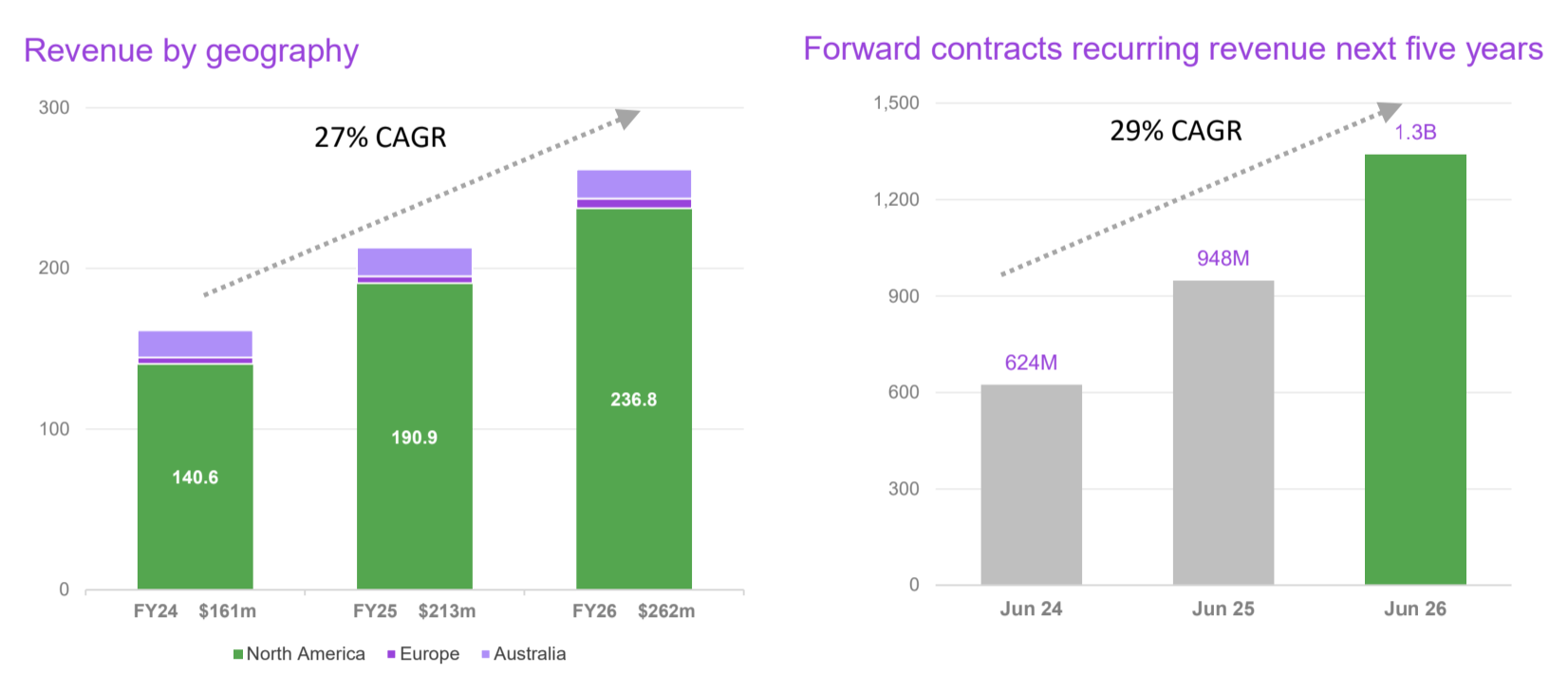
PME’s topline growth may be at 24% YoY, but forward growth is likely in the 30% range for the next few years. Contracts are signing faster than revenue is being recognized. We saw record 2025 and 2026 for new and larger contracts, record renewals 6 out of 6 all at higher per-transaction fees, and higher minimum volumes.
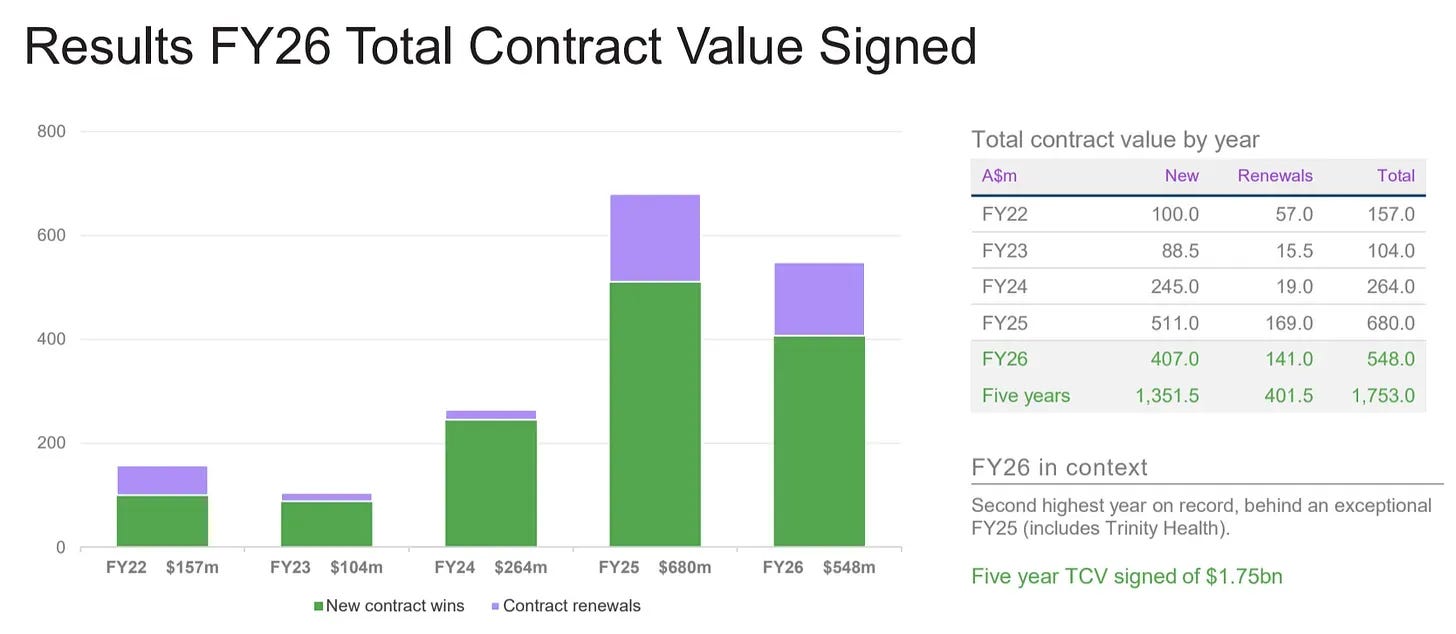
As it stands, PME has a total contract value of A$1.75B and a 5-year contract value of A$1.35B, showing the business's floor revenue.
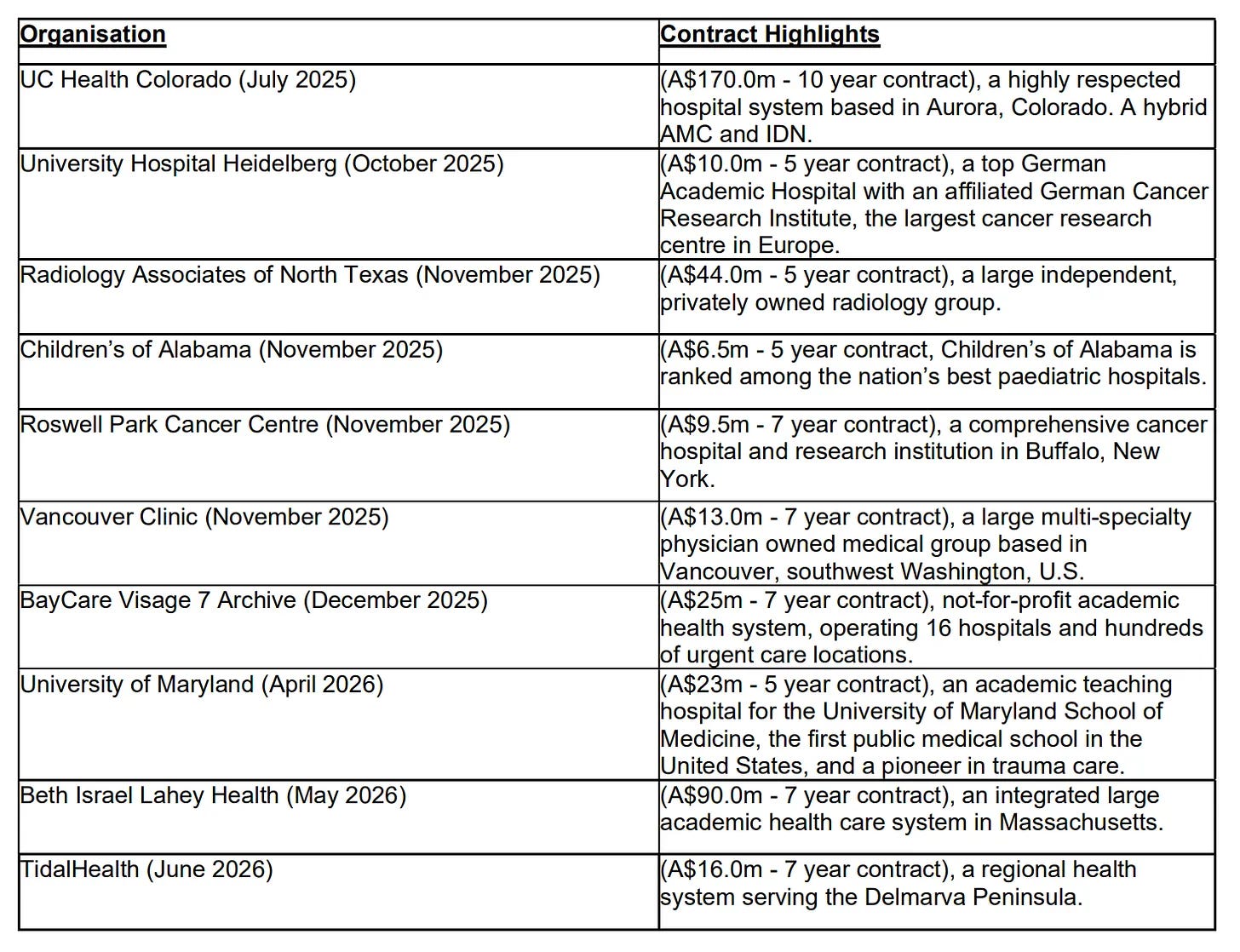
Below are the 10 contracts signed during the year. 9 are in the US, and 1 is at a German university with Europe's largest cancer research center. The large ones are ‘full stack,’ some are ‘full stack +1’ (cardiology imaging, such as UCHealth Colorado), and all are cloud-based.
Below are the 6 renewals (1 extended - VISN23), with higher per-transaction fees and some with increased minimum volume. The company also maintained the 100% retention rate.
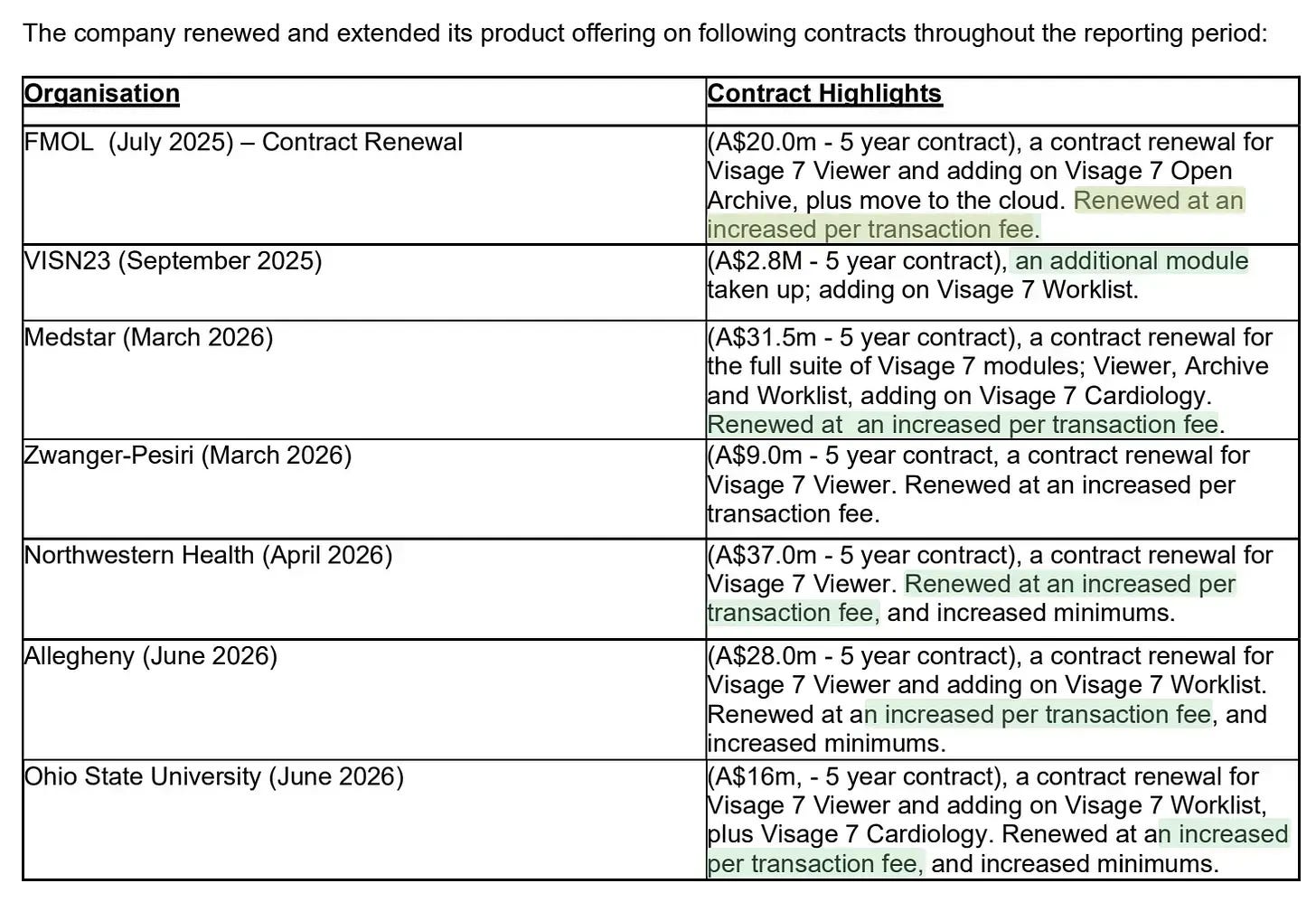
These price increases show clear pricing power and directly improve PME’s already impressive margins (74% EBIT and >50% FCF), 3 times higher than the next competitor (Sectra).
Looking at the contract details also shows that PME is successfully transitioning into a true platform, cross-selling core function viewers into archive, workflow modules, and into other imaging scopes from radiology: CT, MRI, X-ray to cardiology imaging: heart and vascular to lung, digital pathology, oncology, and ophthalmology.
Operating as a ‘full stack’ platform (viewer, archive, workflow, and since 2026, reporting) across multiple imaging scopes is exactly why PME will be the gatekeeper for AI applications.
2. The AI playbook
First, I just want to quickly review the three key risks I flagged in the original deep dive: key-man, AI, and valuation.
Key man
There are no changes in senior executive levels, but the list of directors again shows how important Dr. Sam Hupert, Anthony Hall, and Peter Kempen have been to the company. Any of them leaving would be a blow. An interesting read I found is that 30% of the total workforce is female, but 37% are female in senior executive roles. Additionally, voluntary staff turnover is only 2% in FY2026, far below the tech industry average of 10-15%. So not only are customers staying, but employees are staying put too.

On to AI
I find PME not only incredibly insulated, but also able to use AI to improve the business in many ways.
